

Cotton has been used in textiles for generations, but its role in modern menstrual care involves much more than growing and harvesting a natural fibre. Turning cotton into a sanitary pad requires multiple stages, including cultivation, fibre processing, material selection, product design, manufacturing, and quality checks.
As consumers become more interested in the materials used in personal care products, understanding this journey can help them make better-informed decisions. Organic cotton sanitary pads are one option for people who want to learn more about the fibres used in their menstrual products and how those materials are processed.
From the farm where cotton is grown to the finished product available on a store shelf, every stage contributes to the final pad’s characteristics, performance, and suitability for everyday use.
1. The Journey Begins With Cotton Cultivation
Cotton cultivation is the first stage in the journey from raw fibre to menstrual care product. Cotton plants produce soft fibres around their seeds, and these fibres are harvested and processed for use in textiles and other products.
The conditions under which cotton is grown can vary depending on the region, climate, soil, agricultural practices, and farming inputs.
What Makes Organic Cotton Different?
Organic cotton is cultivated according to specific agricultural standards that restrict certain synthetic pesticides and fertilisers. Depending on the certification scheme, requirements may also cover soil management, handling, processing, and traceability.
Conventional and organic cotton can both produce useful textile fibres, but their agricultural requirements differ. Organic certification provides a framework for assessing how the cotton was grown and handled within the scope of that standard.
For consumers, an important consideration is understanding exactly what a product’s organic claim covers. A sanitary pad may use organic cotton in its top sheet without every layer of the finished product being made from organic materials.
This distinction helps explain why checking product descriptions and certification details is valuable when comparing menstrual care options.
2. Harvesting and Preparing the Cotton Fibres
Once cotton plants mature, the fibres are harvested and separated from the seeds through a process known as ginning. The resulting fibres are then prepared for subsequent processing.
At this stage, factors such as fibre length, cleanliness, and consistency can influence how the cotton performs in its intended application.
Cotton used in textiles may undergo additional processes depending on the final product. For menstrual care, the material must be suitable for its specific role, whether that is forming a skin-contact layer or serving another function in the product.
Why Fibre Quality Matters
The characteristics of cotton fibres can affect softness, strength, and how the material behaves during manufacturing. However, the quality of a finished sanitary pad cannot be determined by cotton alone.
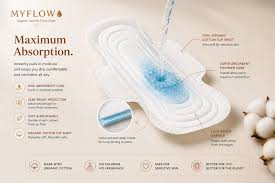
A pad is a multi-component product. Its performance also depends on its absorbent core, backing, adhesive, construction, and overall design.
This means that even when two products use cotton, they may differ in how they feel, how well they manage menstrual flow, and how securely they remain in place.
3. From Raw Cotton to a Skin-Contact Layer
After preparation, cotton fibres may be processed into a suitable textile or nonwoven material. Nonwoven materials are formed by bonding or interlocking fibres rather than weaving them into a conventional fabric.
The precise manufacturing method depends on the intended application and product design.
For sanitary pads, the top sheet is particularly important because it is the layer that comes into contact with the body. Its texture, flexibility, and ability to allow menstrual fluid to pass through can influence the user’s experience.
Why the Top Sheet Matters
A comfortable top sheet should suit the product’s intended use while working with the absorbent layers beneath it. Consumers may prefer a soft-feeling cotton surface, especially if they find certain synthetic-feeling materials uncomfortable.
However, the term “cotton” does not automatically mean that a product will prevent irritation for everyone. Skin sensitivity varies, and discomfort may also be related to friction, moisture, fragrances, adhesives, or prolonged wear.
When evaluating organic cotton sanitary pads, check whether the organic cotton is specifically identified as the top-sheet material, the absorbent component, or another part of the product.
Clear material descriptions make it easier to understand what is actually touching the skin.
4. Designing the Absorbent Core
A sanitary pad must do more than provide a comfortable surface. It also needs to absorb and retain menstrual fluid while helping reduce leakage during everyday movement.
The absorbent core is designed to receive fluid from the surface and distribute it through the pad. Depending on the product, this core may contain cotton, cellulose-based materials, other absorbent fibres, or a combination of components.
The choice of materials and the way they are arranged can affect the pad’s absorbency, thickness, flexibility, and ability to manage fluid.
Absorbency and Distribution Work Together
Absorbency describes a material’s ability to take up and retain liquid. Fluid distribution refers to how liquid spreads through the absorbent structure.
Both are important. If fluid remains concentrated in one area, the pad may feel uncomfortable even when other parts of the core have unused capacity.
Manufacturers therefore consider the relationship between the top sheet, absorbent core, and backing when designing a finished product.
The most suitable pad also depends on the user’s menstrual flow. A lighter pad may work for lighter days, while heavier days may call for a larger size or greater absorbency.
5. Manufacturing the Finished Sanitary Pad
Once the individual materials are prepared, they are assembled into the finished product. Although manufacturing methods differ between brands and product types, a pad generally combines a skin-contact layer, absorbent structure, and backing.
Other components may include adhesive strips, wings, protective wrappers, and packaging.
Each component serves a particular purpose. The top sheet provides the contact surface, the core absorbs fluid, and the backing helps limit leakage through the underside. Adhesives help secure the pad to underwear.
Why Manufacturing Quality Matters
The performance of a finished product depends on the consistency of its construction. Manufacturers need appropriate processes for handling materials, assembling layers, checking product dimensions, and maintaining hygiene during production.
Quality checks may assess characteristics such as absorbency, product integrity, adhesive performance, and packaging condition.
Consumers may not have access to every manufacturing detail, but they can look for transparent product information, relevant certifications, and clear instructions from the brand.
Organic sourcing is one consideration, but it does not replace the need for appropriate manufacturing controls and finished-product quality.
6. Understanding the Role of Product Testing
Testing helps manufacturers evaluate whether a sanitary pad meets defined specifications and performs as intended. The exact tests depend on the product, its materials, applicable requirements, and the claims being made.
For example, manufacturers may assess fluid absorption, leakage performance, material integrity, or other product characteristics.
Where a brand makes claims about dermatological testing, hypoallergenic properties, or specific certifications, consumers can look for details explaining what was tested and what the results establish.
No single test proves every aspect of a product’s performance. Similarly, the presence of organic cotton does not automatically establish that a finished pad is suitable for every person with sensitive skin.
Understanding the difference between a material claim and a finished-product claim helps consumers interpret product information more accurately.
7. Packaging, Storage, and Disposal
After assembly and quality checks, sanitary pads are packaged to protect them during storage, transport, and handling. Packaging can also provide important product information, including size, intended use, material details, and disposal instructions.
Consumers should store menstrual products in a clean, dry place and follow the manufacturer’s guidance.
Disposal is another important part of the product journey. Organic cotton content does not automatically mean that the entire pad is biodegradable or compostable. Adhesives, backing materials, and other components may have different environmental characteristics.
Likewise, a pad should not be flushed unless the specific product is expressly designed and verified for that method of disposal. Most conventional sanitary pads should be placed in the appropriate waste stream according to local guidance.
Consumers interested in reducing environmental impact should examine the complete product composition and its disposal recommendations rather than relying on the word “organic” alone.
8. What to Look for When Choosing 100% Organic Cotton Pads
The phrase 100% organic cotton pads can be appealing to consumers who want more information about the materials used in their menstrual care products. Before purchasing, it is worth checking the scope of the claim and the details provided by the manufacturer.
Here are several practical considerations:
- Identify the cotton component: Check whether the claim applies to the top sheet, the absorbent core, or the complete product.
- Look for certification details: If a product is described as certified organic, check which standard or certification supports the claim and what it covers.
- Review the complete material description: A cotton surface does not necessarily mean every other component is made from cotton.
- Consider absorbency and size: Choose a product appropriate for your flow and intended use.
- Assess comfort: Surface texture, fit, moisture management, and friction can all influence how a pad feels during wear.
- Read usage and disposal instructions: Follow the manufacturer’s recommendations for changing, wearing, and disposing of the product.
These checks provide a more complete basis for comparing products than relying on one feature or marketing phrase.
Exploring Organic Cotton Period Care With Flawsome
Consumers researching cotton-based menstrual products can compare material information, sizing, and product features before deciding which option suits their needs.
Flawsome’s 100% Organic Cotton Pads are presented on the brand’s website with multiple size options, including L, XL, and XXL. The product page also describes features such as a soft-feeling surface, wider back coverage, and an absorbency-focused design.
Reviewing the manufacturer’s product description can help shoppers understand the features being offered and decide whether the product aligns with their preferences. As with any menstrual product, individuals should consider their own flow, comfort requirements, and skin sensitivities.
From Farm to Finished Product: Making an Informed Choice
The journey from cotton cultivation to a finished sanitary pad involves agricultural practices, fibre preparation, material processing, product engineering, manufacturing, and quality checks. Each stage contributes to the final product, but no single feature tells the whole story.
Organic cotton can offer a meaningful point of distinction for consumers interested in how their materials are sourced. Still, the complete product matters: its construction, absorbency, comfort, supporting claims, and disposal requirements all deserve consideration.
By reading product descriptions carefully and checking the scope of material claims, consumers can make more informed decisions about their period care. Understanding what happens between the cotton farm and the finished pad is a practical first step towards choosing products that fit their individual needs.
