

A child’s smile changes significantly as their teeth and jaws develop. During childhood and adolescence, permanent teeth gradually replace baby teeth, and the alignment of the bite becomes easier to assess. While some children develop naturally straight teeth, others may experience crowding, spacing or bite problems that require professional attention.
For parents, recognising the early signs of orthodontic problems can help determine when to arrange an assessment. Not every child needs braces, and some dental alignment concerns can be monitored as they grow. However, identifying potential issues early can help families understand the available treatment options and the most suitable time to begin.
Orthodontic treatment is not only about creating a straighter smile. It can also address certain bite problems, improve the way teeth fit together and make oral hygiene easier in some situations.
This guide explains the common signs that may indicate a child needs braces, when parents should consider an orthodontic assessment and what to expect during the treatment process.
1. Common Signs Your Child May Need Braces
Children do not always recognise when their teeth are developing incorrectly. Parents may notice changes in their child’s smile, chewing habits or tooth alignment before the child mentions any concerns.
Some common signs include:
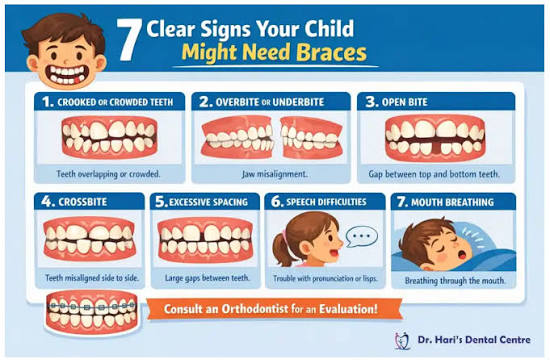
- Crowded teeth: Teeth overlap or appear too close together because there is insufficient space.
- Gaps between teeth: Noticeable spaces may appear between permanent teeth.
- Crooked teeth: Individual teeth may grow at unusual angles or positions.
- Overbite: The upper front teeth extend too far over the lower front teeth.
- Underbite: The lower front teeth sit in front of the upper front teeth.
- Crossbite: Some upper teeth sit inside the lower teeth when the child bites together.
- Open bite: The upper and lower front teeth do not meet when the back teeth are closed.
These signs do not automatically mean that braces are required. An orthodontic assessment can help determine whether the alignment is part of normal dental development or whether treatment may be beneficial.
2. When Should Hawkesbury Parents Consider Orthodontic Care?
Parents often wait until most permanent teeth have appeared before thinking about orthodontic treatment. However, an early orthodontic assessment can help identify developing problems and determine whether monitoring or treatment is appropriate.
The Australian Society of Orthodontists recommends that children have their first orthodontic assessment by around seven years of age. At this stage, a combination of baby teeth and permanent teeth is usually present, allowing an orthodontist to identify certain developing bite and alignment concerns.
Seeking orthodontic care in the Hawkesbury can help parents understand their child’s dental development and whether any orthodontic concerns require attention.
An early assessment does not mean that a child will automatically need braces. In many cases, the orthodontist may recommend monitoring the development of the teeth and jaws before deciding whether treatment is necessary.
3. Why Early Orthodontic Assessments Matter
Early assessments can help identify issues that may become more complicated as a child grows.
Some orthodontic problems are easier to assess while the jaws are still developing. Depending on the individual situation, early intervention may help guide jaw development, create space for permanent teeth or address certain bite problems.
Potential benefits of an early assessment include:
- Identifying developing alignment problems.
- Monitoring the growth of the upper and lower jaws.
- Recognising bite issues.
- Assessing available space for permanent teeth.
- Understanding whether early treatment may be beneficial.
- Planning the most appropriate treatment timing.
It is important to remember that early treatment is not necessary for every child. An orthodontist will assess the individual circumstances before recommending any intervention.
4. Understanding Different Types of Bite Problems
Bite alignment plays an important role in how the upper and lower teeth meet. When the teeth do not fit together properly, children may experience difficulties with chewing or other dental concerns.
Some common bite problems include:
Overbite
An overbite occurs when the upper front teeth overlap the lower front teeth more than expected. A significant overbite may affect tooth alignment and increase the risk of damage to the front teeth.
Underbite
An underbite occurs when the lower front teeth sit ahead of the upper front teeth. It may be related to the positioning or development of the jaws.
Crossbite
A crossbite occurs when some upper teeth sit inside the lower teeth rather than outside them. Depending on the situation, it may affect how the teeth meet and how the jaws function.
Open Bite
An open bite occurs when the upper and lower front teeth do not touch when the back teeth are together. It may be associated with certain oral habits or jaw development patterns.
An orthodontist can assess these conditions and explain whether treatment is required.
5. What Causes Children to Need Braces?
There are several reasons why children may develop alignment or bite problems. Some factors are inherited, while others may be associated with childhood dental development and oral habits.
Common contributing factors include:
- Genetics and family dental history.
- Differences in jaw size and tooth size.
- Premature loss of baby teeth.
- Delayed loss of baby teeth.
- Teeth developing in unusual positions.
- Prolonged thumb-sucking habits.
- Certain tongue or swallowing habits.
- Previous dental injuries.
Not every alignment issue can be prevented. However, regular dental check-ups can help parents monitor their child’s oral development and identify concerns that may need further assessment.
6. What Happens During an Orthodontic Assessment?
An orthodontic assessment helps determine whether a child’s teeth and jaws are developing as expected.
During the appointment, the orthodontist may:
- Examine the position and alignment of the teeth.
- Assess how the upper and lower teeth meet.
- Review jaw development.
- Ask about dental history and relevant oral habits.
- Take photographs or dental records where appropriate.
- Recommend further imaging if clinically necessary.
- Discuss possible treatment options.
Parents can also use the appointment to ask questions about treatment timing, expected duration, costs and ongoing care.
The orthodontist will explain whether the child needs treatment immediately, may benefit from early intervention or should return for monitoring as permanent teeth develop.
7. What Types of Braces Are Available for Children?
If orthodontic treatment is recommended, the most appropriate option will depend on the child’s dental development, alignment concerns and treatment requirements.
Common options include:
Traditional Metal Braces
Metal braces use brackets attached to the teeth and connected by an orthodontic wire. They gradually apply controlled pressure to move teeth into improved positions.
Ceramic Braces
Ceramic braces work similarly to traditional metal braces but use tooth-coloured or less noticeable brackets.
Clear Aligners
Clear aligners are removable trays designed to move teeth gradually. They may be suitable for selected cases, depending on the child’s age, dental development and ability to follow the treatment instructions.
Not every orthodontic option is suitable for every child. The orthodontist will recommend an approach based on the individual assessment.
8. How Parents Can Support Children During Orthodontic Treatment
Starting orthodontic treatment can be a new experience for children. Parents can help make the process easier by encouraging good oral hygiene and supporting their child’s treatment routine.
Helpful steps include:
- Encouraging regular brushing and flossing.
- Following the orthodontist’s cleaning instructions.
- Attending scheduled appointments.
- Avoiding foods that may damage braces.
- Following instructions for removable appliances.
- Reporting discomfort or damaged orthodontic equipment.
- Encouraging children to ask questions about their treatment.
Children may experience some temporary discomfort after braces are fitted or adjusted. Parents should follow the orthodontist’s advice about managing any discomfort and maintaining oral hygiene.
9. When Should Parents Arrange an Appointment?
Parents should consider an orthodontic assessment if they notice persistent crowding, unusual tooth positions, significant gaps or problems with the way their child bites.
Other signs that may warrant professional attention include difficulty chewing, frequent biting of the cheeks or roof of the mouth, early or late loss of baby teeth and visible differences between the upper and lower jaws.
An assessment is also worthwhile if a child’s dentist recommends further evaluation.
There is no need to wait until all permanent teeth have appeared before seeking professional advice. An early assessment can help establish whether treatment is needed now or whether the child’s development should simply be monitored.
Helping Your Child Develop a Healthy Smile
Recognising the early signs of orthodontic problems can help parents make informed decisions about their child’s dental development. Crowding, gaps, crooked teeth and bite alignment issues are some of the common reasons an orthodontic assessment may be recommended.
However, every child’s teeth and jaws develop differently. An early consultation does not necessarily mean braces will be required, as some concerns may improve naturally or only need monitoring.
For Hawkesbury families, arranging an orthodontic assessment at the appropriate age can provide a clearer understanding of their child’s dental development and available treatment options. With professional guidance, parents can support their children throughout their orthodontic journey and help them develop healthy, confident smiles.