

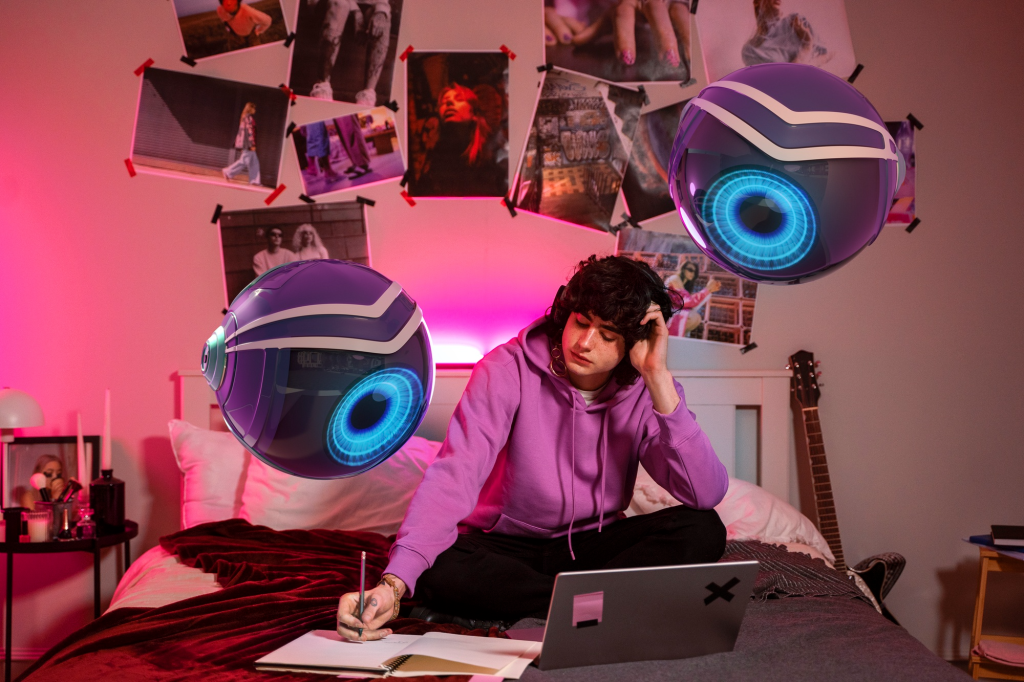
There’s a moment most of us know well. You open an app to check one thing, and forty minutes later you surface from a scroll you barely remember starting. It doesn’t feel like a choice so much as something that happened to you. That’s not an accident – it’s the result of deliberate engineering, built around one of the brain’s most powerful chemical messengers.
Dopamine is commonly described as the “pleasure chemical,” but that framing misses the point. Neuroscientists have long understood that dopamine is less about pleasure itself and more about anticipation – the wanting, not the getting. It fires in response to the possibility of a reward, and it fires harder when that reward is uncertain. This quirk of biology is the engine behind slot machines, loot boxes, and your social feed. Interactive entertainment platforms like sankra, which combines game variety with live-format engagement, build their user experience around this same principle: unpredictable reward timing that encourages return visits and longer sessions.
Why Uncertainty Is the Hook
B.F. Skinner realized this in the 1950s using pigeons and food pellets. When rewards came on a variable ratio schedule – the pigeon never knew how many pecks would yield a result – the behavior became remarkably persistent. Without incentive, the bird continues much longer than it would have with consistent rewards. Psychologists call this extinction resistance, and it’s the same phenomenon playing out every time someone refreshes their inbox or pulls down on a social feed. The variable nature of what you find is the point. Sometimes nothing. Sometimes something that makes you laugh out loud. That inconsistency is not a flaw – it’s the feature that makes the habit stick.
The Architecture of Engagement
Digital platforms don’t rely on a single mechanism. They stack several.
- Intermittent reinforcement – unpredictable positive feedback (likes, comments, wins, notifications) keeps users returning to check.
- Social validation loops – the number on a like counter triggers the same reward circuitry as acceptance in physical environments.
- Streaks and progress bars – these tap into loss aversion more than motivation. Breaking a 47-day streak feels painful, which keeps people coming back even when they have no real desire to.
- Autoplay and infinite scroll – these remove natural stopping points that would otherwise let rational thinking reassert itself.
The table below maps these mechanics to their psychological effects:
| Design Mechanic | Psychological Effect | Common Context |
| Variable reward (feeds, alerts) | Dopamine anticipation loop | Social media, news apps |
| Social validation (likes, shares) | Status and belonging signals | Instagram, TikTok |
| Streaks / progress tracking | Loss aversion, commitment bias | Gaming, fitness apps |
| Infinite scroll / autoplay | Removes decision to stop | YouTube, Netflix |
| Sound and visual cues | Conditioned stimulus response | Most mobile apps |
What’s Actually Happening in the Brain
When you receive a notification, your brain doesn’t know yet whether it’s meaningful or junk. That gap between stimulus and resolution is where dopamine floods in. The notification itself becomes satisfying – not solely its content. This is why notification sounds are hard to ignore even when you’re almost certain they’re nothing important. Over time, repeated dopamine spikes without meaningful payoff can blunt the system. Researchers studying heavy social media use have found patterns similar to tolerance in substance use: the same input produces a diminished response, so users need more – more time, more novelty – to feel the same engagement.
The Novelty Drive
Humans are wired to attend to new information. In a survival context, novelty signals potential threats or opportunities. Algorithmic feeds take advantage of this by showing you something new every time you scroll. The brain keeps scanning because it genuinely doesn’t know what’s coming, and evolution has primed it to treat that uncertainty as significant.
Loss Aversion as Retention
Daniel Kahneman’s work showed that losses are felt about twice as strongly as similar gains. Platforms use this asymmetry deliberately. Streaks, loyalty rewards, accumulated points – these aren’t just incentives to stay. They’re penalties for leaving. Once you’ve built something, the fear of losing it creates friction that functions more like a trap than a feature.
Can Awareness Change Anything?
Understanding these mechanics doesn’t make you immune, but it shifts the relationship. Just knowing that the notification ping is a conditioned stimulus, not a meaningful cue, introduces a small but real pause before the automatic reach for the phone. Knowing that a streak is a loss aversion tool, not a genuine achievement, lets you decide more consciously whether to maintain it.
Some researchers advocate for structural reform: chronological feeds instead of algorithmic ones, autoplay off by default, notification batching. These changes would reduce engagement metrics, which is exactly why platforms resist them. The commercial incentives run in the opposite direction from user wellbeing. What’s clear is that the distance between wanting to open an app and choosing to open it has narrowed considerably. Reclaiming some of that gap starts with understanding what closed it.